Explosive Testimonies: Criminals Embedded in Metro Police
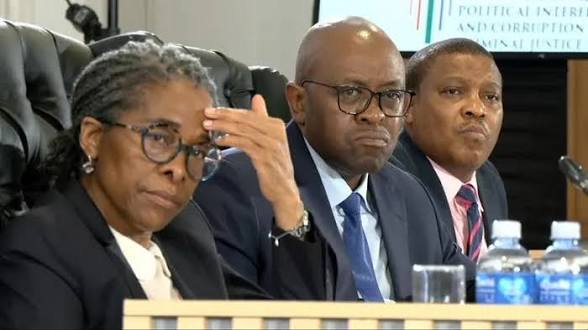
PRETORIA — The Judicial Commission of Inquiry Into Criminality, Political Interference, and Corruption in the Criminal Justice System—widely known as the Madlanga Commission—has intensified its public hearings, uncovering shocking levels of systemic collusion between high-ranking police officials, political figures, and organized crime syndicates.
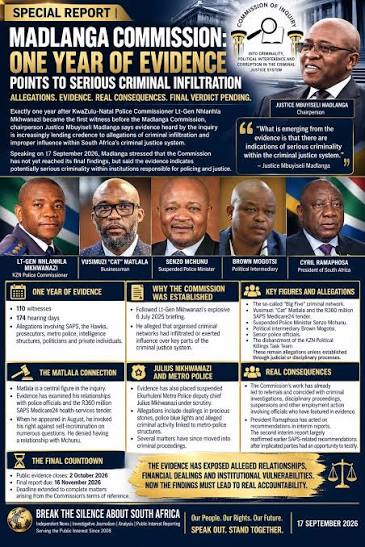
Chaired by retired Constitutional Court Justice Mbuyiseli Madlanga, the commission was established following explosive public revelations regarding the compromise of key investigative units. Over 170 days of testimony have painted a disturbing picture of an executive and security apparatus where tender manipulation, dossier theft, and gang infiltration operate as standard procedure.
Explosive Allegations and Bizarre Witnesses
The inquiry’s latest phase has focused heavily on the relationship between state officials and notorious underworld figures. Recent proceedings centered on the financial and operational dealings of ANC-linked businessmen, tender moguls, and taxi bosses who allegedly operated as the “Big Five” cartel—a syndicate linked to cash-in-transit heists, drug smuggling, and tender rigging.
A central figure in recent cross-examinations, North West businessman Suliman Carrim, faced intense scrutiny over suspicious financial flows, including millions of Rands transferred to taxi organizations and private entities tied to underworld bosses. Carrim’s repeated failures to appear before the commission due to alleged medical emergencies prompted evidence leaders to threaten criminal prosecution, especially after allegations surfaced that he was spotted unbothered at high-end shopping centers while claiming to be bedridden.
Testimony has also highlighted how senior crime intelligence officials deliberately stalled investigations, sabotaged wiretaps, and reassigned dedicated detectives who came too close to uncovering cartel operations within municipal and provincial structures.
Infiltration of Metropolitan Police Departments
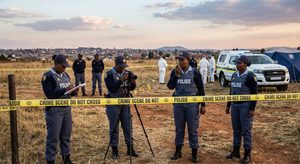
The scope of the Madlanga Commission has expanded beyond the national police framework to examine regional law enforcement agencies, most notably the Johannesburg Metropolitan Police Department (JMPD) and Ekurhuleni Metropolitan Police Department (EMPD).
Witnesses testifying before Justice Madlanga described a breakdown in municipal policing integrity, where metro officers were allegedly deployed to act as armed escorts for cartel leaders, facilitate blue-light convoys for illegal operations, and intimidate political opponents. Shocking evidence revealed that private vehicles tied to syndicate bosses were outfitted with municipal branding, police radios, and unauthorized emergency lighting.
The commission’s evidence leaders presented documented proof of high-ranking metro police commanders accepting monthly retainers from criminal figures in exchange for political protection and early warnings regarding upcoming raids.
Implications for Public Trust and Reform
The revelations before the Madlanga Commission have deepened public cynicism regarding law enforcement in South Africa. Civil society groups, constitutional experts, and opposition leaders have voiced alarm over the extent to which organized crime has captured institutional apparatuses meant to safeguard citizens.
With the commission set to submit its final report and recommendations to President Cyril Ramaphosa in November 2026, pressure is mounting for sweeping structural reforms. Demands include complete lifestyle audits for all police leadership, the establishment of an independent body to oversee metro police departments, and immediate criminal prosecutions for every official implicated in sworn testimony.
About The Author

Discover more from MZANZI NEWS
Subscribe to get the latest posts sent to your email.